What if your biggest event liability isn’t the crowd, the venue, or the keynote-but the vendor badge you approved weeks ago?
At large-scale tech events, third-party vendors power everything from registration platforms and Wi-Fi infrastructure to security, catering, AV production, and attendee data capture. Each one can introduce operational, contractual, cybersecurity, privacy, and safety risks that may land back on the event organizer.
When a vendor mishandles personal data, causes a service outage, violates labor rules, or injures an attendee, “they were independent” is rarely enough protection. Liability often turns on what you knew, what you required, what you monitored, and what your contracts failed to control.
Mitigating vendor risk requires more than collecting certificates of insurance. It demands disciplined due diligence, precise contract terms, real-time oversight, and a response plan built before the doors open.
What Makes Third-Party Vendor Liability Unique at Large-Scale Tech Events
Third-party vendor liability at large-scale tech events is different because vendors are often plugged directly into the event’s operations, data systems, physical space, and attendee experience. A catering company may create a slip-and-fall risk, while a badge-scanning vendor may create a cyber liability exposure if attendee data is mishandled. That mix of physical risk, technology risk, and contractual responsibility makes vendor management more complex than standard event planning.
At a major tech conference, for example, a hardware demo vendor might bring lithium battery devices, temporary networking equipment, and payment processing terminals onto the show floor. If a device overheats, a booth cable causes an injury, or a POS system exposes customer data, the event organizer could still be pulled into the claim even if the vendor caused the issue. This is why vendor liability insurance, general liability coverage, cyber insurance, and clear indemnification clauses matter before anyone arrives onsite.
In practice, the risk usually comes from three areas:
- Incomplete certificates of insurance or coverage limits that do not match the event contract.
- Unapproved subcontractors handling setup, security, AV equipment, or attendee data.
- Poor documentation of safety checks, access permissions, and incident response procedures.
A useful approach is to centralize vendor approvals in contract management software such as Ironclad or an event platform like Cvent. These tools help track insurance documents, service agreements, booth requirements, and compliance deadlines in one place. The real benefit is simple: when something goes wrong, you can quickly prove who was responsible, what requirements were agreed to, and whether the vendor met them.
How to Build Vendor Contracts, Insurance Requirements, and On-Site Compliance Controls
Start with a vendor contract that clearly assigns responsibility before anyone unloads equipment or connects to your network. For large-scale tech events, each agreement should include indemnification, data security obligations, service-level expectations, cancellation terms, and a right-to-audit clause for safety, cybersecurity, and staffing compliance.
Insurance requirements should be specific, not copied from an old template. At minimum, require commercial general liability insurance, workers’ compensation, auto liability for delivery teams, and cyber liability insurance for vendors handling attendee data, payment systems, badge scanning, or Wi-Fi infrastructure.
- Collect certificates of insurance and confirm your company is listed as an additional insured where appropriate.
- Set minimum coverage limits based on risk: AV rigging, drone vendors, food service, and cloud demo providers should not be treated the same.
- Use contract management or vendor risk management tools like Ironclad, ServiceNow, or OneTrust to track approvals, renewals, and missing documents.
On-site compliance controls are where many events fail. A vendor may have a perfect contract but still bring unbadged subcontractors, uncertified electricians, or consumer-grade networking devices that create security and liability exposure.
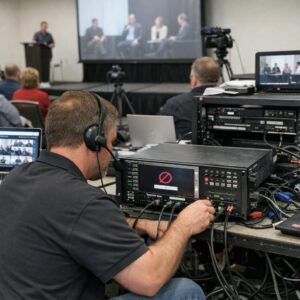
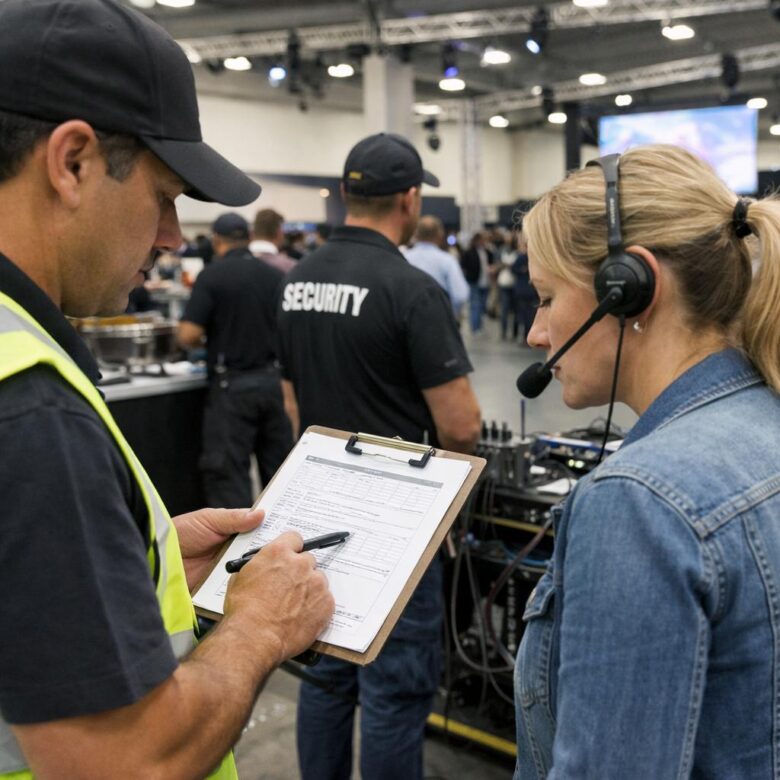
A practical approach is to run a vendor check-in desk with proof of insurance, staff rosters, equipment inspection notes, and emergency contacts available in real time. For example, at a product launch with live demos, the network vendor should confirm firewall rules, device inventory, and incident escalation contacts before attendees arrive.
Assign one owner for vendor compliance during load-in, show hours, and teardown. That person should have authority to stop unsafe work, document violations, and escalate issues to legal, event security, or facilities management immediately.
Common Vendor Risk Gaps That Increase Event Liability-and How to Close Them
One of the biggest vendor risk gaps at large tech events is assuming a signed contract is enough. It is not. Event organizers should verify certificates of insurance, additional insured status, workers’ compensation coverage, cyber liability insurance, and indemnity language before vendors arrive onsite.
A common real-world example: an audiovisual contractor installs temporary cabling near a demo booth, an attendee trips, and the venue asks who approved the setup. If the vendor’s insurance limits are too low or the certificate of insurance expired, the event host may absorb legal costs, medical claims, and reputational damage.
- Insurance gaps: Require current COIs, minimum liability limits, cyber insurance for data-handling vendors, and documented approval from your risk or legal team.
- Access control gaps: Use badge restrictions, equipment check-in logs, and role-based permissions for vendors handling servers, payment devices, Wi-Fi networks, or attendee data.
- Incident response gaps: Give every vendor a clear escalation path for injuries, property damage, data breaches, equipment failures, and security incidents.
Vendor risk management software such as OneTrust, ServiceNow Vendor Risk Management, or contract tools like DocuSign CLM can help centralize insurance documents, security questionnaires, compliance deadlines, and approval workflows. The practical benefit is simple: fewer last-minute surprises when legal, security, facilities, and procurement are all moving fast.
From experience, the vendors most likely to create liability exposure are not always the largest ones. Small staffing agencies, freelance technicians, temporary Wi-Fi providers, and booth builders often move quickly, so they need the same due diligence checklist as headline production partners.
Wrapping Up: Mitigating Liability Risks for Third-Party Vendors at Large-Scale Tech Events Insights
Liability control at large-scale tech events should be treated as a business decision, not a paperwork exercise. The safest vendor is not always the cheapest or fastest-it is the one with clear accountability, verified insurance, strong data practices, and the ability to perform under pressure.
Practical takeaway: choose vendors only after confirming contractual protections, operational readiness, and incident-response responsibilities. If a vendor cannot explain how they prevent, manage, and absorb risk, they should not be placed in a critical event role.

Dr. Lucas Harrington is a technology and business events specialist focused on virtual conferences, hybrid event solutions, and professional networking platforms. He provides practical guidance for companies adapting to the future of digital events.