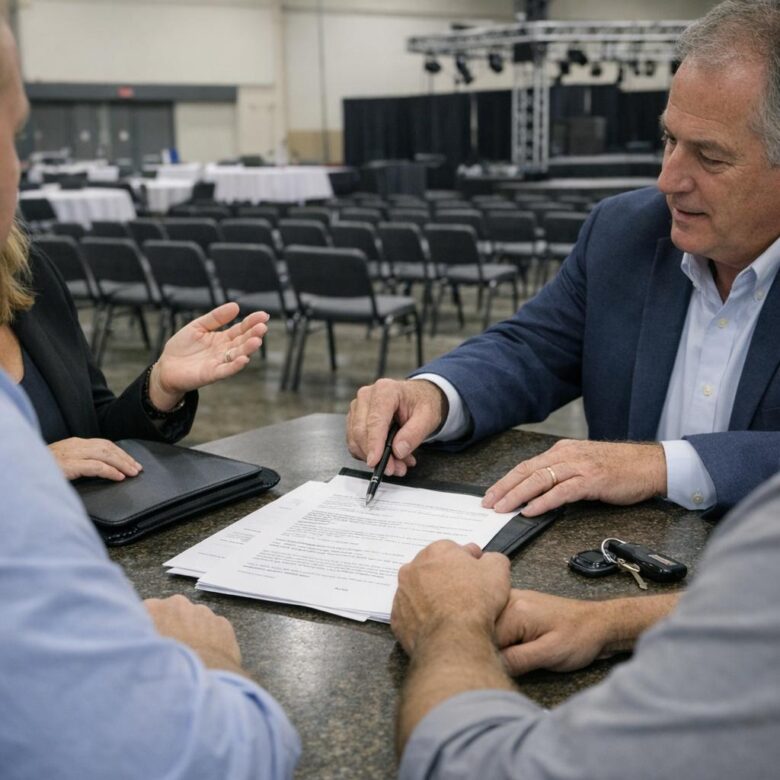
What if your biggest event liability isn’t the venue fee, but the cancellation clause buried three pages deep?
High-capacity corporate venues carry high-stakes risk: six-figure deposits, rigid attrition terms, force majeure ambiguity, and rescheduling rules that can shift financial exposure overnight.
For legal, procurement, and event teams, negotiating cancellation language is not a formality-it is a risk allocation exercise that determines who pays when attendance drops, executives change plans, markets move, or disruption makes the event impossible.
This article breaks down the clauses that matter most, the negotiation leverage buyers often overlook, and the contract language that can protect budget, flexibility, and business continuity before the agreement is signed.
What High-Capacity Venue Cancellation Clauses Must Define Before You Sign
For a large corporate event, the cancellation clause should do more than state a penalty. It must clearly define the cancellation deadline, refund schedule, non-refundable deposit, attrition terms, and whether service charges, taxes, security fees, AV labor, catering minimums, and room blocks are included in the cancellation cost.
Pay close attention to how the venue calculates damages. A fair high-capacity venue contract should distinguish between true losses and revenue the venue can reasonably recover by rebooking the space. For example, if a company cancels a 1,200-person sales kickoff six months out and the convention center resells the ballroom for the same dates, the contract should require the venue to offset that revenue against your cancellation fee.
- Trigger dates: Confirm the exact calendar dates when penalties increase, not vague phrases like “within six months.”
- Scope of fees: Identify whether cancellation applies to venue rental only or also catering, audiovisual services, staffing, insurance, and equipment rentals.
- Force majeure: Ensure it covers practical disruptions such as government restrictions, airport shutdowns, labor strikes, or safety-related access issues.
In practice, I’ve seen the biggest disputes come from attached vendor agreements, especially AV and production. If your team manages proposals in Cvent or tracks redlines in DocuSign CLM, keep the venue agreement, catering BEOs, hotel room block contract, and technology rider linked together so cancellation exposure is visible before approval.
One smart negotiating move is to request a sliding cancellation fee tied to documented lost profit, not gross event value. It gives the venue protection while preventing your company from paying for costs the venue never actually incurred.
How to Negotiate Cancellation Fees, Attrition Terms, and Rebooking Credits
Start by separating cancellation fees from attrition penalties. A venue may agree to reduce one but not the other, especially for high-capacity corporate events where food and beverage minimums, room blocks, labor, and AV services are priced differently. In practice, the best leverage comes before signature, when competing bids from platforms like Cvent or hotel sourcing tools give you a real market comparison.
Ask for a sliding cancellation schedule instead of a flat penalty. For example, a 1,200-person sales kickoff might negotiate 10% of estimated revenue if canceled 180 days out, 35% at 90 days, and a higher amount only inside 30 days. This gives the venue protection while avoiding a six-figure loss if leadership changes dates early.
- Attrition: Request cumulative pickup, not nightly pickup, so strong attendance on peak nights offsets weaker shoulder nights.
- Rebooking credit: Push for 100% credit if the event is rebooked within 12 months, applied to room rental, catering, or meeting space.
- Mitigation: Require the venue to resell rooms or space and deduct recovered revenue from your damages.
Use contract management software such as Ironclad or DocuSign CLM to track cut-off dates, room block release deadlines, and deposit exposure. I’ve seen planners lose negotiating power simply because they missed a review window and had to accept standard hotel contract terms. Also coordinate with corporate event insurance providers; some policies may help offset cancellation costs, but only if the contract language matches the insured risk.
Common Cancellation Clause Mistakes That Increase Corporate Event Financial Risk
One costly mistake is accepting a flat cancellation fee without checking how it compares to the venue’s actual resale risk. For a 1,000-person sales kickoff, paying 90% of the estimated food and beverage minimum six months out may be unreasonable if the hotel still has time to resell the ballroom.
Another issue is vague language around force majeure, government restrictions, travel disruption, and corporate safety policies. If the clause only covers “impossibility” and not “commercial impracticability,” your company may still owe liquidated damages even when attendance collapses due to airline cancellations or public health advisories.
- Missing mitigation language: Require the venue to make reasonable resale efforts and credit recovered revenue against your cancellation liability.
- Ignoring attrition overlap: Cancellation penalties and room block attrition fees can stack unless the contract clearly prevents double recovery.
- No documentation process: Use contract management software like DocuSign CLM or event platforms such as Cvent to track deadlines, notices, and approval history.
A practical safeguard is to tie cancellation fees to a sliding scale based on the event date and confirmed lost revenue, not just a generic percentage. In real negotiations, venues often resist this at first, but they may agree if you offer stronger deposit timing, preferred vendor commitments, or future booking consideration.
Legal review also matters because “non-refundable deposit” language can quietly override more balanced cancellation terms. Before signing a high-capacity corporate venue contract, have counsel compare the cancellation clause, event insurance coverage, indemnity section, and attrition terms as one financial risk package.
Summary of Recommendations
A cancellation clause is not boilerplate; it is a financial risk tool. For high-capacity corporate venue contracts, the strongest position comes from negotiating early, tying penalties to realistic resale opportunities, and aligning notice periods with actual planning risk.
Before signing, decision-makers should ask one question: does this clause protect both the event budget and the business if plans change? If the answer is unclear, push for tiered fees, documented mitigation duties, flexible rebooking rights, and precise force majeure language. A well-negotiated clause preserves leverage long after the contract is signed.

Dr. Lucas Harrington is a technology and business events specialist focused on virtual conferences, hybrid event solutions, and professional networking platforms. He provides practical guidance for companies adapting to the future of digital events.