What if your trade show booth is losing its best leads before your sales team even says hello?
At high-traffic events, every badge scan, booth visit, product interaction, and follow-up delay can determine whether your investment turns into pipeline-or disappears into a spreadsheet.
RFID technology changes that equation by capturing lead behavior automatically, enriching prospect data in real time, and revealing which interactions actually drive ROI.
For exhibitors under pressure to prove event performance, RFID is no longer just a tracking tool-it is a smarter way to convert trade show activity into measurable revenue opportunities.
What Makes RFID Lead Capture More Valuable Than Traditional Badge Scanning at Trade Shows
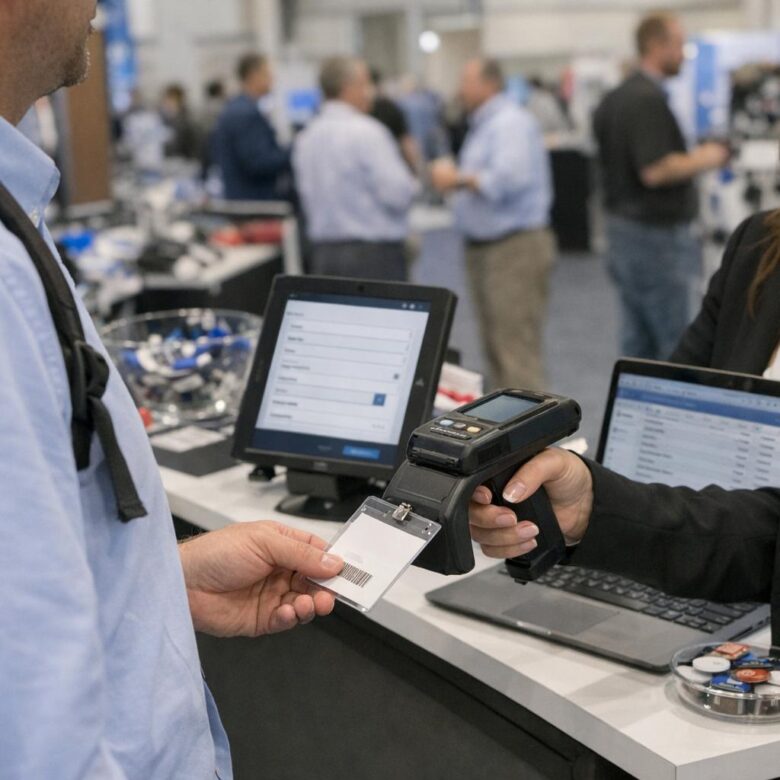
Traditional badge scanning is useful, but it often captures only basic contact details after someone agrees to stop at your booth. RFID lead capture goes further by tracking engagement behavior in real time, such as booth visits, product demo attendance, session participation, and repeat interactions without forcing every touchpoint into a manual scan.
The real value is context. For example, if a visitor spends ten minutes near your enterprise software demo, attends your pricing session, and later returns to speak with sales, an RFID event tracking system can flag that person as a higher-quality lead than someone who only had a badge scanned for a giveaway.
- Better lead scoring: RFID data helps sales teams prioritize prospects based on actual interest, not just a collected business card.
- Cleaner CRM integration: Platforms like Cvent can connect event engagement data with CRM tools, improving follow-up timing and personalization.
- Stronger ROI reporting: Marketing teams can compare booth traffic, dwell time, session attendance, and conversion cost more accurately.
From real trade show planning experience, the biggest difference is speed. Badge scans usually create a list; RFID lead capture creates a behavioral profile that helps exhibitors decide who needs a same-day sales call, who belongs in a nurture campaign, and which products attracted the most qualified traffic.
This matters when exhibit space, event sponsorships, booth staffing, RFID wristbands, lead retrieval devices, and marketing automation software all carry real costs. The more precise your lead capture data is, the easier it becomes to justify trade show investment and reduce wasted follow-up.
How to Build an RFID-Enabled Lead Capture Workflow Before, During, and After the Event
Start before the trade show by defining what a “qualified lead” means for your sales team. Configure your RFID badges, scanners, and lead capture software so every scan connects to useful fields such as company size, product interest, buying timeline, and consent for follow-up.
For best results, integrate the RFID system with your CRM before the event opens. Platforms like Salesforce, HubSpot, or Cvent can sync attendee data, assign leads to sales reps, and trigger marketing automation without manual spreadsheet cleanup.
- Before: Test RFID readers, badge encoding, CRM mapping, and internet backup options.
- During: Scan badges at demos, meetings, giveaways, and private consultations.
- After: Segment leads by intent and send personalized follow-up within 24-48 hours.
During the event, do not treat every RFID scan as equal. A visitor who scans into a product demo or pricing consultation should be tagged differently from someone who only enters a booth raffle, because that distinction affects sales priority and lead nurturing cost.
A practical example: at a medical device trade show, a booth team might scan attendees at three touchpoints-product demo, clinical brochure pickup, and distributor meeting request. When synced into the CRM, the sales manager can quickly see which contacts need immediate outreach and which belong in an educational email sequence.
After the event, review scan locations, engagement notes, and conversion quality, not just total badge scans. This helps you calculate RFID lead capture ROI more accurately and decide whether future investment in RFID readers, event apps, or managed lead retrieval services is worth the cost.
Common RFID Trade Show Lead Capture Mistakes That Reduce ROI-and How to Fix Them
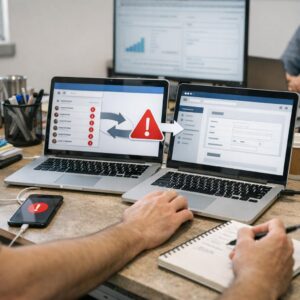
One of the biggest RFID trade show lead capture mistakes is treating every badge scan as a qualified lead. A scan only proves booth traffic, not buying intent. Fix this by adding quick qualification fields in tools like Salesforce, HubSpot, or Cvent LeadCapture, such as budget range, purchase timeline, product interest, and follow-up priority.
Another costly issue is poor staff training. I have seen booth teams scan badges quickly but forget to tag conversations, which leaves sales reps guessing after the event. A simple fix is to create a 30-second lead capture workflow before the show: scan, ask two qualifying questions, select a lead score, and add one useful note.
- Mistake: No CRM integration. Fix: Connect RFID lead retrieval software with your CRM or marketing automation platform before the event.
- Mistake: Delayed follow-up. Fix: Trigger same-day email nurturing or sales alerts for high-value prospects.
- Mistake: Ignoring data privacy. Fix: Confirm consent, badge permissions, and event data policies to avoid compliance problems.
RFID devices can also create bad data when booth staff scan visitors who only want a giveaway. To protect lead quality, separate “engagement scans” from “sales-ready leads” in your lead management system. For example, a visitor who attends a product demo and asks about pricing should be tagged differently from someone who only enters a raffle.
The real benefit of RFID lead capture comes from clean data, fast routing, and consistent sales follow-up. Without that process, even premium trade show technology becomes an expensive badge scanner.
Wrapping Up: Maximizing Lead Capture ROI Using RFID Technology at Trade Shows Insights
RFID turns trade show lead capture from a manual collection task into a measurable revenue system. The strongest ROI comes when the technology is tied to clear goals: faster qualification, cleaner data, immediate follow-up, and post-event attribution.
Practical takeaway: invest in RFID only when your team is ready to act on the data it captures. Choose a solution that integrates with your CRM, supports real-time scoring, and gives sales teams usable context-not just contact details.
For exhibitors focused on pipeline quality, not badge-scan volume, RFID is no longer a nice-to-have. It is a strategic tool for making every booth interaction more accountable.

Dr. Lucas Harrington is a technology and business events specialist focused on virtual conferences, hybrid event solutions, and professional networking platforms. He provides practical guidance for companies adapting to the future of digital events.